Wandsworth Council carpet disposal rules in Putney
Posted on 10/06/2026
Wandsworth Council carpet disposal rules in Putney: a practical, local guide
If you are replacing old flooring, clearing out a rental, or just dealing with a rolled-up carpet that has seen better days, the disposal part can feel oddly confusing. The good news is that Wandsworth Council carpet disposal rules in Putney are manageable once you understand what counts as bulky waste, what should not go in your normal bins, and how to prepare the carpet properly. A few minutes of planning can save you a wasted trip, an awkward collection, or that classic "where on earth does this go?" moment.
This guide walks through the practical side of carpet disposal in Putney: how council collections typically work, what to check before you move the carpet, when recycling or reuse may be possible, and where people often go wrong. It also covers the decision points that matter if you are a tenant, landlord, homeowner, or managing a clean-out after refurbishment. If you are dealing with wider end-of-tenancy or deep-clean jobs around the home, you may also find it helpful to look at our end of tenancy cleaning in Putney and carpet cleaning support in Putney pages for the bigger picture.

Contents
- Why Wandsworth Council carpet disposal rules in Putney matters
- How Wandsworth Council carpet disposal rules in Putney works
- Key benefits and practical advantages
- Who this is for and when it makes sense
- Step-by-step guidance
- Expert tips for better results
- Common mistakes to avoid
- Tools, resources and recommendations
- Law, compliance, standards, or best practice
- Options, methods, or comparison table
- Case study or real-world example
- Practical checklist
- Conclusion
- Frequently asked questions
Why Wandsworth Council carpet disposal rules in Putney Matters
Carpet disposal sounds simple until you try to do it on a Sunday afternoon with a heavy roll, a dust cloud, and not enough tape. In Putney, the rules matter because carpets are bulky household waste, and they are not treated like everyday rubbish. If you leave a carpet out incorrectly, it may not be collected, and in some cases it can create nuisance, block access, or attract a fly-tip complaint. Not ideal. Not fun.
There is also the environmental side. Carpet is often a mix of fibres, backing, glue, dirt, and underlay, which means it is not always easy to recycle in the same way as cleaner, single-material items. If you can separate reusable, recyclable, and general waste parts properly, you are more likely to handle disposal responsibly and avoid unnecessary costs or missed collections.
For residents in Putney, the issue often appears during property moves, redecorating, post-flood recovery, or when a room has been stripped back for new flooring. That is why local knowledge helps. A clear understanding of the council route, along with realistic alternatives, keeps the job moving. If you are already planning a broader clear-out, our article on purchasing property in Putney and the more general locals' perspective on life in Putney can give some useful context around the kind of property changes that often trigger disposal jobs.
Expert summary: the safest way to handle carpet disposal in Putney is to identify whether the carpet is suitable for reuse, whether the council will collect it as bulky waste, and whether it needs to be cut, rolled, or separated before collection. The details matter more than people expect.
How Wandsworth Council carpet disposal rules in Putney Works
In plain English, carpet disposal usually falls into one of three routes: council bulky waste collection, private removal, or reuse/recycling if the carpet is still in decent condition. The council route is the one many people think of first, but it is not always the fastest or most flexible. It is best viewed as a structured option rather than a catch-all solution.
What counts as carpet waste?
Most of the time, the carpet itself is the obvious item. But in reality, a disposal job often includes underlay, carpet grippers, old adhesive pads, thresholds, and sometimes damaged offcuts. These may not all be handled in the same way. A clean, rolled carpet is easier to deal with than mixed waste that has been left half-torn, waterlogged, or stuffed with nails and fittings. To be fair, a lot of disposal problems start right there.
Why preparation matters
Carpets are bulky, awkward, and can be surprisingly dirty. If you are arranging collection, you usually want them cut to a manageable size, tied or taped securely, and kept free from loose debris where possible. That makes handling easier for whoever is collecting it and reduces the chance of collection issues.
It is also worth checking whether the carpet has been affected by mould, flood water, pets, or pest damage. In those cases, you may want to seal it more carefully and handle it sooner rather than later. The smell alone can become a nuisance, and nobody wants that lingering in a hallway for another three days.
When the council route is the right fit
The council option generally makes sense when you have one or a few bulky items, you are not in a rush, and the carpet is too large for standard household waste collection. It is also often the easiest route if you want a straightforward, compliant disposal method without hiring a skip or vehicle. For people handling a whole flat tidy-up, this can be the cleanest route of all.
When another method is better
If you have several rooms' worth of flooring, heavy underlay, broken furniture, and renovation waste, a council collection may not be the most efficient choice. In those cases, a private removal service or a broader clearance plan is often more practical. You may also need to think about the rest of the property, which is where services such as house cleaning in Putney or domestic cleaning in Putney can fit around the disposal work.
Key Benefits and Practical Advantages
Following the correct disposal route is not just about keeping the council happy. It gives you a cleaner, safer, and less stressful result. And let's face it, once you are standing in a room with bare floorboards and dust in the skirting lines, you want the rest of the process to be tidy and predictable.
- Less chance of missed collection: preparing the carpet properly makes it easier to collect.
- Lower risk of complaints: no one wants bulky waste left on a pavement or shared access area.
- Better handling of mixed waste: separating carpet, underlay, and fittings improves clarity.
- Possible reuse or recycling: if the carpet is in decent condition, it may be suitable for a second life.
- Less disruption during a move or renovation: disposal becomes one task instead of a messy chain reaction.
There is also a trust factor. When tenants, landlords, and homeowners follow a proper disposal process, it reduces arguments about who was responsible and whether the property was left in an acceptable state. That matters a lot in end-of-tenancy situations. If you are balancing cleaning and clearance, it can help to see how carpet disposal fits with end of tenancy cleaning in Putney and, if needed, upholstery cleaning in Putney for soft furnishings that may be leaving with the carpet.
Who This Is For and When It Makes Sense
This is one of those topics that sounds very narrow until you realise how many people it affects. In Putney, the people most likely to need carpet disposal guidance include:
- homeowners replacing worn or damaged flooring
- tenants moving out and clearing a flat
- landlords preparing a property for re-letting
- letting agents managing an inventory tidy-up
- builders or decorators removing old coverings before new work
- households dealing with flood, smoke, or severe staining damage
If you are dealing with a smaller room or a single strip of carpet, the job may be fairly simple. But if you are removing old flooring from a larger flat near the river, or from a home with stairs, awkward corners, or shared access, the practical issues multiply. A rolled carpet can be heavier than it looks, and hauling it down a narrow stairwell is a very different experience from lifting it off a ground-floor hallway. Putney residents know that kind of awkward geometry very well, especially in older conversions and mixed-use buildings.
It may also make sense to think beyond disposal. For example, if the carpet has only stains or odours rather than structural damage, cleaning might be enough. Our guide to red wine stain removal for Putney homes is a useful reminder that not every "problem carpet" needs replacing.
Step-by-Step Guidance
If you want the process to go smoothly, break it into stages. Simple. Not always easy, but simple.
- Check the carpet's condition. Decide whether it is reusable, recyclable, or truly waste. A carpet that is only lightly worn may be better donated or reused than thrown away.
- Remove loose dirt first. Give it a quick vacuum if possible. It is not about making it spotless; it is about making it safer and less unpleasant to handle.
- Separate components. Take off underlay, grippers, nails, or metal strips where practical. Keep these apart from the carpet if they are going to be handled differently.
- Cut the carpet into manageable sections. Long, unwieldy rolls are hard to lift. Smaller strips are easier to move, especially on stairs.
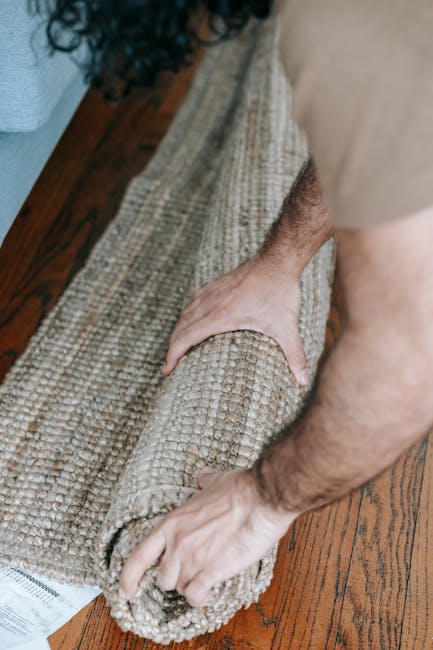
- Roll and secure each section. Use tape, twine, or another suitable tie so pieces do not spring open during handling.
- Check collection instructions carefully. Council bulky waste collections usually have preparation rules. Follow them exactly so the item is accepted.
- Place the carpet where it can be collected safely. Keep access clear. If you live in a block, this may mean a designated collection point rather than the pavement.
- Confirm timing. Avoid leaving bulky waste out too early if that creates a nuisance. Early morning collection days are often easiest.
If the carpet was part of a bigger clean-out, think about the rest of the room too. A full reset after removal is usually cleaner and quicker if you also deal with dust, edge debris, and the fabric items around it. That is where a general service overview can help you plan the sequence, and our services overview is a sensible place to start if you want to organise the work in a more structured way.
Expert Tips for Better Results
A few small choices make the whole job easier. In our experience, most carpet disposal headaches come from under-preparing rather than from any single rule being misunderstood.
- Measure the pieces before cutting. Smaller sections are easier to carry, but make them too small and you create lots of loose fragments. Aim for practical, handleable strips.
- Use good tape, not flimsy tape. It sounds obvious, but one weak wrap and the roll opens up halfway down the stairs. Annoying.
- Photograph the carpet before disposal if you are a tenant. That gives you a record of what was removed and can help if there is later disagreement.
- Check access in advance. Shared hallways, narrow entrances, and parking restrictions can turn a simple collection into a drama.
- Keep wet carpets separate. A soaked carpet is heavier, smellier, and more likely to need quicker handling.
- Plan the disposal for the same day as the replacement work. The longer old carpet sits around, the more dust, trip hazards, and general chaos it creates.
A small local note here: in a Putney flat on a drizzly morning, a carpet that has been left by the door for a day can become a muddy mess very quickly. London weather does what it wants, as ever.
Common Mistakes to Avoid
Most mistakes are practical, not legal. That is actually good news, because practical mistakes are easy to fix once you spot them.
- Leaving carpet loose and unfolded. This makes it harder to collect and easier to trip over.
- Mixing carpet with unrelated waste. Old paint tins, broken tiles, and carpet offcuts should not be thrown together unless the collection service explicitly allows it.
- Assuming all councils handle bulky waste the same way. They do not. Always check the local process rather than copying advice from another borough.
- Forgetting underlay and fittings. These often create more mess than the carpet itself.
- Leaving it outside too early. That can cause complaints, damp damage, or a collection that is not accepted.
- Not thinking about reuse. If the carpet is clean and usable, someone else may be able to use it. Throwing away a perfectly serviceable piece is wasteful and, frankly, a bit of a shame.
Another one to watch: not checking the property rules if you are in managed accommodation. Sometimes the council route is fine, but the building manager still wants access to be arranged carefully. That little detail can make all the difference.
Tools, Resources and Recommendations
You do not need specialist equipment, but the right basic kit makes the work safer and calmer.
| Item | Why it helps | Best use |
|---|---|---|
| Sharp utility knife | Makes clean cuts through thick carpet backing | Cutting large carpets into sections |
| Heavy-duty tape or twine | Keeps rolled sections secure | Binding rolls for lifting and collection |
| Gloves | Protects hands from dirt, staples, and rough backing | Handling old carpet and underlay |
| Vacuum cleaner | Removes loose grit and debris first | Prepping the carpet for disposal or reuse |
| Sack or tub for fixings | Contains nails, grippers, and trim pieces | Sorting out the small sharp bits |
For larger jobs, consider whether disposal should sit inside a broader home reset. A property that has just had carpets lifted often benefits from a proper deep clean of hard floors, skirting, and corners. If that is your situation, our pages on domestic cleaning and office cleaning can help if the space is being refreshed for living or working use.
If you are choosing between a professional clean and a replacement, our local article on best carpet cleaners on Upper Richmond Rd SW15 is also useful for thinking through the cleaning side before you decide to dispose.
Law, Compliance, Standards, or Best Practice
While I am careful not to overstate exact council procedures here, the general principle in the UK is straightforward: household waste should be presented according to local authority rules, and bulky items should not be abandoned on streets, communal landings, or pavements. Carpet disposal in Putney should be treated with the same care you would give any other bulky household item.
Best practice usually means:
- following the local collection preparation instructions
- keeping access routes safe and uncluttered
- separating waste streams where practical
- avoiding fly-tipping or leaving items in shared spaces
- checking landlord, managing agent, or building rules where relevant
If carpet removal is part of a refurbishment or post-incident clean-up, safety matters too. Cut edges can be sharp, hidden staples can snag skin, and mould-affected carpet can be unpleasant to handle. That is one reason a sensible workflow matters. If any part of the job involves wet floors, damaged surfaces, or flood recovery, it is worth reading about emergency carpet cleaning after floods in Putney because flooded textiles behave differently from dry household waste.
One more practical point: if you are in a leasehold property, the lease or building rules may impose additional expectations about common areas. These are not always written in huge letters on a noticeboard, which is a bit irritating, but they still matter. If in doubt, ask before moving bulky items through shared spaces.
Options, Methods, or Comparison Table
There is no single best method for everyone. The right choice depends on how much carpet you have, how quickly it needs to go, and whether you are also managing other waste or cleaning work.
| Method | Best for | Advantages | Limitations |
|---|---|---|---|
| Council bulky waste collection | Single items or a small amount of carpet | Structured and straightforward when prepared correctly | Usually less flexible on timing and preparation |
| Private removal service | Larger jobs, urgent clear-outs, mixed waste | More flexible, faster, and often more hands-off | Costs more than a council collection |
| Reuse or donation | Clean, usable carpet in good condition | Reduces waste and may help someone else | Not suitable for damaged, dirty, or odorous carpet |
| On-site cutting and staged disposal | Stairs, awkward access, or multi-room removals | Easier to move safely and in stages | More labour and more time upfront |
If you are removing carpet during a broader household refresh, a hybrid approach often works best: lift the carpet, separate reusable parts, and then decide whether the remainder is best handled by a council collection or a more flexible service. That way you are not committing too early. A bit of judgement goes a long way here.
Case Study or Real-World Example
Take a typical Putney flat near Putney Bridge. The tenant has just moved out, and the living room carpet is worn, with a few stains near the doorway and a general tired look from years of foot traffic. It is not falling apart, but it is also not something anyone would be delighted to keep. The tenant is also trying to finish before a weekend move, which makes the timing feel tighter than it is.
In a case like that, the first question is not "how do we get rid of it?" It is "should this carpet be replaced at all?" If cleaning is not likely to restore it, then disposal makes sense. The tenant cuts the carpet into sections, removes the underlay separately, secures the rolls, and keeps the hallway clear for collection. Because the building has shared access, they also check the collection point and make sure the rolls are not left in the way. Simple process, no drama, and much less stress than trying to drag a full-room carpet through a stairwell in one piece.
Now compare that with a family who has had a bathroom leak or a flood-affected underlay. The carpet may be wet, heavy, and odorous. In that scenario, disposal becomes more urgent, and cleaning or drying may only be part of the answer. A damp carpet can be a nuisance quickly, so the safest route is to assess it early and avoid letting it sit around the home. That is exactly the kind of situation where residents sometimes discover they need both cleaning support and disposal planning, not one or the other.
It is also common, especially in larger homes, for carpet removal to trigger follow-on jobs. Once the old carpet is gone, you may notice dust in corners, marks on skirting boards, or upholstery that suddenly looks a little tired beside the new flooring. That is not your imagination. The room changes. Quite a lot, actually.
Practical Checklist
Use this before you arrange disposal. It saves mistakes later.
- Have I confirmed the carpet is not reusable?
- Have I checked whether the council collection applies to this item?
- Have I separated underlay, grippers, and sharp fixings?
- Have I cut the carpet into manageable sections?
- Have I secured each roll or bundle properly?
- Have I kept shared hallways, entrances, and pavements clear?
- Have I checked building or landlord rules if I live in managed accommodation?
- Have I arranged the timing so the carpet is not left out too early?
- Have I considered whether the room needs cleaning after removal?
- Have I planned for any wet, mouldy, or damaged material separately?
If you can tick most of those off, you are already ahead of the game. Honestly, that is where most people want to be before the day arrives.
Conclusion
Wandsworth Council carpet disposal rules in Putney are easiest to manage when you treat them as a practical process rather than a mystery. Check whether the carpet can be reused, prepare it properly if it is going for collection, separate the messy bits, and think about access before you move anything. That small bit of organisation can save you a lot of hassle, especially in flats or properties with shared spaces.
For homeowners, landlords, and tenants alike, the goal is the same: remove the old carpet safely, keep the property tidy, and avoid unnecessary waste or disruption. If your project involves a bigger refresh, don't forget that disposal and cleaning tend to work best together. One supports the other, and both make the space feel right again.
Get a free quote today and see how much you can save.
And if you are standing there with a rolled-up carpet and wondering whether this is going to be a pain, take a breath. It usually looks worse before it gets easier. Then it does get easier.